|Indological Scholars Directory – PG01|
॥ भारतीयविद्या-विद्वत्-निर्देशिका – ०१॥
🪶Subhāṣitaratnabhāṇḍāgāram
शनैः पन्थाः शनैः कन्था शनैः पर्वतलङ्घनम्।
शनैर्विद्या च वित्तं च पञ्चैतानि शनैः शनैः॥
शनैर्विद्या च वित्तं च पञ्चैतानि शनैः शनैः॥
— सुभाषितरत्नभाण्डागारम्
śanaiḥ panthāḥ śanaiḥ kanthā śanaiḥ parvatalaṅghanam |
śanairvidyā ca vittaṁ ca pañcaitāni śanaiḥ śanaiḥ ||
śanairvidyā ca vittaṁ ca pañcaitāni śanaiḥ śanaiḥ ||
Anvaya (अन्वय)
शनैः पन्थाः (भवति), शनैः कन्था (भवति), शनैः पर्वतलङ्घनम् (भवति), शनैः विद्या च (भवति), च शनैः वित्तं (भवति), एतानि पञ्च शनैः शनैः (एव भवन्ति)।
English Translation:
Gradually one covers the path, slowly one weaves a garment, and steadily one scales a mountain. In the very same manner, profound knowledge and enduring works are built step by step.
Hindi Translation:
रास्ता पार करना, कपड़े सिलना, पहाड़ चढ़ना, विद्या ग्रहण करना और धन कमाना—ये पाँचों कार्य जीवन में धीरे-धीरे और धैर्य के साथ ही सिद्ध होते हैं।

1. R. G. Bhandarkar
Indologist & Philologist
Sir Ramkrishna Gopal Bhandarkar was a pioneering Indian scholar and social reformer who applied modern critical research methodology to classical South Asian literature and Sanskrit grammar. His rigorous textual scholarship established foundational frameworks for critical Indology in Western India.
Major Works: First Book of Sanskrit, A Peep into the Early History of the Deccan, Vaisnavism, Saivism and Minor Religious Systems

2. Sir William Jones
Orientalist & Jurist
Sir William Jones was an English philologist, jurist, and scholar whose 1786 discourse established the genetic relationship between Sanskrit, Greek, and Latin, founding modern Indo-European comparative linguistics. He also established the Asiatic Society in Calcutta to systematically study Asian history and literature.
Major Works: Sacontala (Translation), Institutes of Hindu Law, Grammar of the Persian Language

3. M. M. Pandurang Vaman Kane
Jurist & Śāstriya Historian
Mahāmahopādhyāya Dr. P. V. Kane was a preeminent Indologist and legal scholar who produced an encyclopedic mapping of ancient Indian jurisprudence and social customs. Awarded the Bharat Ratna in 1963, his exhaustive multi-volume research systematically analyzed over two millennia of Sanskrit legal literature.
Major Works: History of Dharmaśāstra (5 Vols.), History of Sanskrit Poetics, Kadambari (Critical Edition)

4. Friedrich Max Müller
Philologist & Comparative Religionist
Friedrich Max Müller was a German-born philologist and Orientalist who spent most of his academic career at Oxford. He directed the landmark translation series Sacred Books of the East and completed the first critical publication of the entire Ṛgveda Saṃhitā alongside Sāyaṇācārya’s commentary.
Major Works: Rig-Veda-Sanhita (6 Vols.), Sacred Books of the East (50 Vols.), A History of Ancient Sanskrit Literature
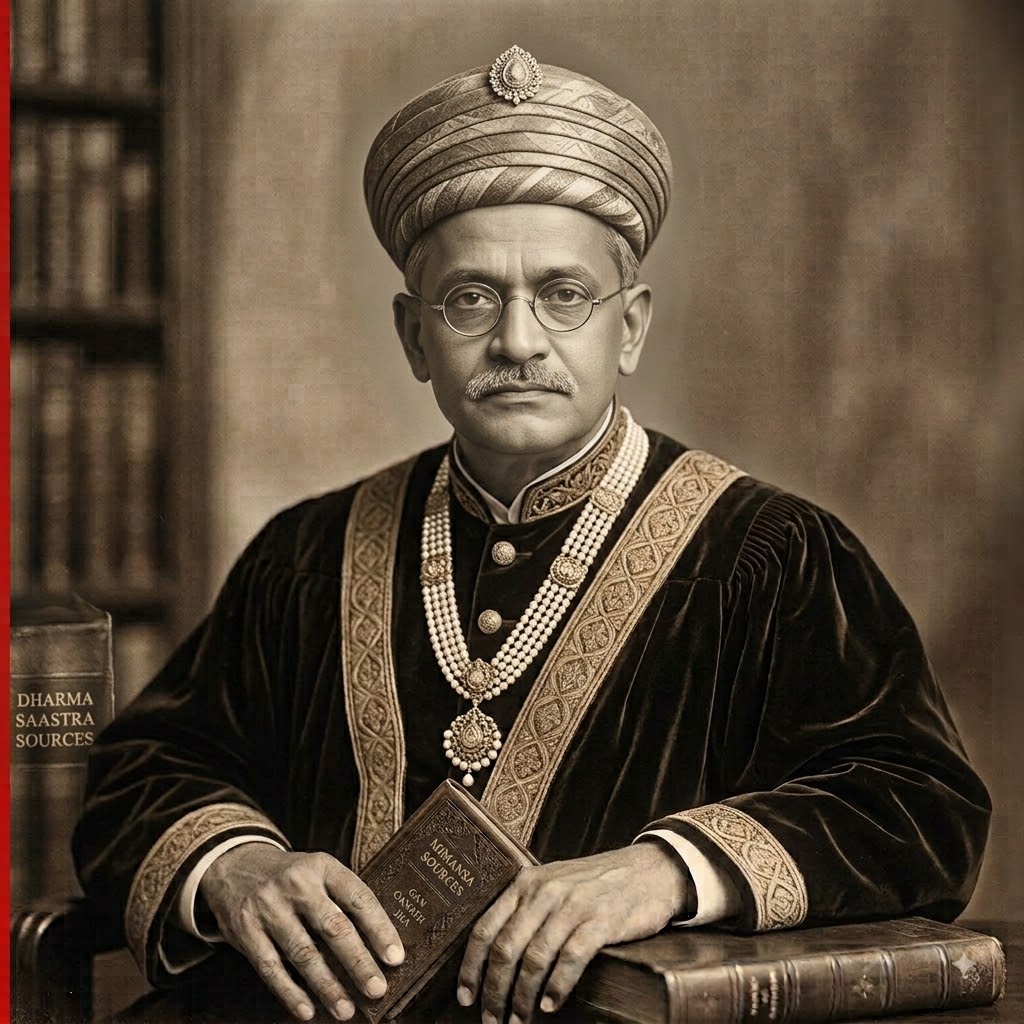
5. M. M. Sir Gaṅgānāth Jhā
Mimāṁsaka & Sanskritist
Mahāmahopādhyāya Sir Ganganath Jha was an international figure in Indology who translated an unprecedented volume of complex Sanskrit philosophical texts. He served as the first Indian principal of the Government Sanskrit College (Benares) and established foundational research on the Prabhākara school of Mimāṁsā.
Major Works: Slokavartika (Translation), Manusmriti with Medhatithi Commentary, Purva-Mimansa in its Sources
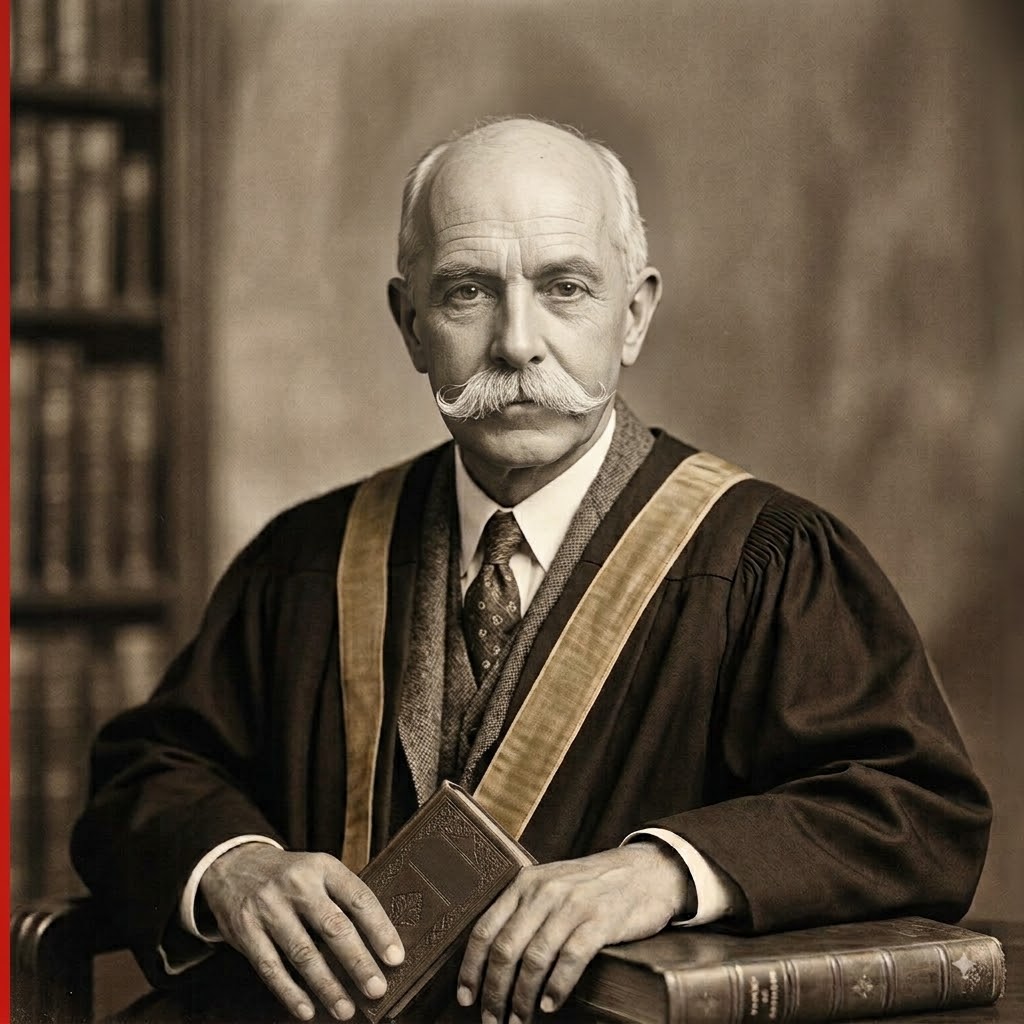
6. Prof. Arthur Anthony Macdonell
Vedic Scholar & Philologist
An Indian-born British linguist, Macdonell succeeded Monier-Williams as Boden Professor of Sanskrit at Oxford. He is celebrated for his pedagogical contributions, including his classic Vedic Reader and comprehensive studies on Vedic mythology, which remain essential for students of Indo-Aryan philology.
Major Works: Vedic Mythology, A History of Sanskrit Literature, Vedic Index (with A. B. Keith)
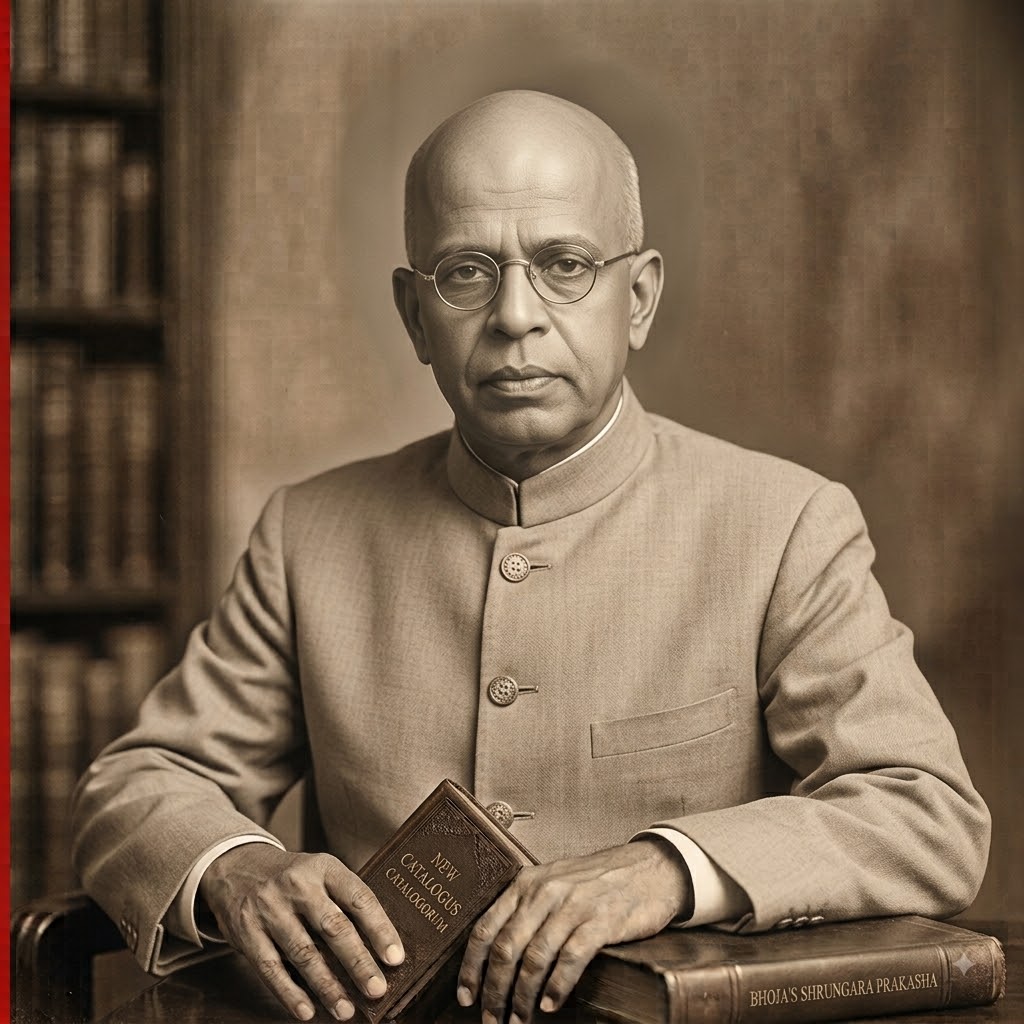
7. Dr. V. Rāghavan
Sanskritist & Musicologist
Padma Bhushan Dr. V. Raghavan was a monumental figure in 20th-century Sanskrit scholarship and the chief architect of the New Catalogus Catalogorum. A master of Indian poetics and aesthetics, he authored over 120 books and 1,200 research papers, preserving rare manuscripts across South Asia.
Major Works: Bhoja’s Śṛṅgāra Prakāśa, The Number of Rasas, New Catalogus Catalogorum
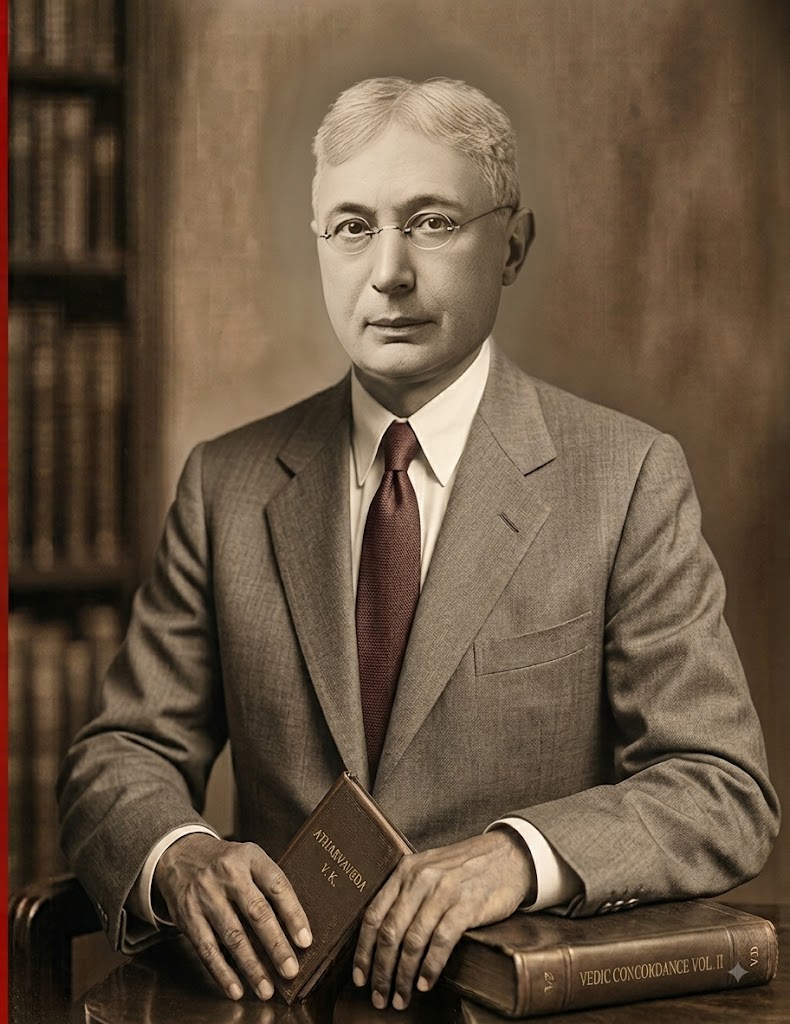
8. Prof. Maurice Bloomfield
Vedic Scholar & Philologist
A distinguished Austrian-American philologist, Bloomfield held the chair of Sanskrit and Comparative Philology at Johns Hopkins University. He produced the monumental Vedic Concordance and edited key Atharvavedic texts (Kauśika Sūtra and the Kashmirian Paippalāda recension), leaving an indelible legacy in Vedic studies.
Major Works: A Vedic Concordance, Hymns of the Atharva-veda (SBE Vol. 42), Rig-Veda Repetitions

9. Prof. Louis Renou
Philologist & Indologist
Louis Renou was a colossus of French Indology. His meticulous grammatical analysis of Vedic texts—especially his monumental multi-volume Études védiques et pāṇinéennes—profoundly expanded our modern understanding of the Ṛgveda and the evolution of Sanskrit as a liturgical language.
Major Works: Grammaire de la langue sanskrite, L’Inde classique (co-authored), Études védiques et pāṇinéennes (multi-vol)

10. M. M. Dr. P. V. Kane
Jurist, Historian & Bharat Ratna
Mahāmahopādhyāya Dr. Pāṇḍuraṅg Vāman Kane was awarded the *Bharat Ratna* (India’s highest civilian honor) for his lifelong monumental work, the five-volume, 6,500-page History of Dharmaśāstra. This definitive, exhaustive encyclopedia mapped the entire social, religious, and legal history of India for 2,000 years, an achievement perhaps unparalleled by any other single scholar.
Major Works: History of Dharmaśāstra (BORI, Multi-vol), History of Saṃskṛta Poetics

11. Prof. Franklin Edgerton
Linguist & Indologist
Franklin Edgerton was Salisbury Professor of Sanskrit and Comparative Philology at Yale University. A pioneering linguist, he produced the definitive Buddhist Hybrid Sanskrit Grammar and Dictionary, alongside acclaimed translations of the Bhagavad Gītā and critical studies on the Pañcatantra.
Major Works: Buddhist Hybrid Sanskrit Grammar and Dictionary, The Bhagavad Gita Translated and Interpreted, The Panchatantra Reconstructed

12. M. M. Dr. Gopinath Kaviraj
Philosopher & Indologist
Mahāmahopādhyāya Dr. Gopinath Kaviraj was a revered philosopher, Indologist, and Principal of Government Sanskrit College, Benares. Awarded the Padma Vibhushan, he was an unparalleled authority on Tantric literature, Kashmir Shaivism, and esotericism, bridging deep traditional scholarship with rigorous textual analysis.
Major Works: Aspects of Indian Thought, Bhartiya Sanskriti Aur Sadhana, Tantrik Sahitya

13. Prof. Jan Gonda
Indologist & Philologist
Jan Gonda was a monumental Dutch Indologist and Professor of Sanskrit at Utrecht University. A prolific scholar with over 60 books, he edited the vast multi-volume series A History of Indian Literature and published exhaustive philological studies on Vedic vocabulary, ritualism, and early Hinduism.
Major Works: Vedic Literature (Samhitās and Brāhmaṇas), Vishuism and Sivaism, The Vision of the Vedic Poets

14. Dr. Suniti Kumar Chatterji
Linguist & Philologist
Padma Vibhushan Dr. Suniti Kumar Chatterji was a preeminent Indian linguist and National Professor of Humanities. His landmark treatise, The Origin and Development of the Bengali Language, set the benchmark for Indo-Aryan comparative philology, tracing the evolutionary arc from Vedic Sanskrit to modern vernaculars.
Major Works: The Origin and Development of the Bengali Language (ODBL), Indo-Aryan and Hindi, Kirata-Jana-Krti

15. Prof. Michael Witzel
Philologist & Indologist
Wales Professor of Sanskrit at Harvard University, Michael Witzel is a leading authority on the textual stratigraphy, dialects, and historical geography of the Ṛgveda and Yajurveda traditions, as well as the founder of the Electronic Journal of Vedic Studies (EJVS).
Major Works: The Origin and Development of Classical Hinduism, The Origins of the World’s Mythologies, Katha Aranyaka Edition

16. M. M. Pt. Vidhushekhara Bhattacharya
Traditional Scholar & Textual Critic
Mahāmahopādhyāya Vidhushekhara Bhattacharya was a profound traditional scholar who headed the Indological research center at Rabindranath Tagore’s Visva-Bharati, Santiniketan. He bridged classical Śāstric learning with modern critical methodology, producing seminal works on the Māṇḍūkya Kārikā and Buddhist-Brahminical philosophical exchanges.
Major Works: The Āgamaśāstra of Gauḍapāda, The Basic Conception of Buddhism, Bhoja’s Tattvaprakāśa

17. Prof. Paul Thieme
Indo-Europeanist & Grammarian
Paul Thieme was a titan of German Indology and Comparative Philology. Known for his rigorous methodological precision, he revolutionized Western understanding of Pāṇini’s Aṣṭādhyāyī with works like Pāṇini and the Veda, bridging traditional Indian vyākaraṇa techniques with Indo-European linguistics.
Major Works: Pāṇini and the Veda, Kleine Schriften, Untersuchungen zur Wackernagels Grammatik

18. Pt. Chārudeva Śāstrī
Grammarian & Lexicographer
Pandit Chārudeva Śāstrī was one of modern India’s most celebrated authorities on Sanskrit grammar and stylistic usage. His masterworks, such as Vyākaraṇa-Mahābhāṣya commentaries and Sva-Viṣayaka-Vyākaraṇa-Sūtra-Vṛtti, provided unparalleled clarity on correct idiom, verbal roots, and grammatical nuance for generations of scholars.
Major Works: Sanskrit Usage (Vyākaraṇa-Mahābhāṣya Series), Śabda-Siddhānta, A Grammar of Sanskrit Language

19. Prof. Daniel H. H. Ingalls
Philosopher & Sanskritist
Daniel H. H. Ingalls, Sr. was Wales Professor of Sanskrit at Harvard University and a pioneering force in Western studies of Indian logic and poetics. His groundbreaking translation and structural analysis in Materials for the Study of Navya-Nyāya Logic opened classical Indian formal logic to modern philosophical inquiry.
Major Works: Materials for the Study of Navya-Nyāya Logic, An Anthology of Sanskrit Court Poetry, The Dhvanyāloka of Ānandavardhana (Translation)

20. M. M. Pt. Rajeshwar Shastri Dravid
Śāstrī & Nyāya Scholar
Mahāmahopādhyāya Padma Bhushan Pt. Rajeshwar Shastri Dravid was a towering exponent of traditional Śāstric learning in Varanasi. A revered master of Navya-Nyāya and Mīmāṃsā, he presided over the traditional scholar community of Kashi and authored foundational commentaries preserving traditional debate methodologies.
Major Works: Bharatiya Rajashastra Parikshana, Navya-Nyāya-Tattva-Prakashika, Sanskrit Vangmaya Vimarsha

21. Prof. George Cardona
Linguist & Pāṇinian Scholar
Professor Emeritus of Linguistics at the University of Pennsylvania, George Cardona is widely regarded as a leading Western authority on Pāṇini’s Aṣṭādhyāyī. His definitive structural survey, Pāṇini: A Survey of Research, and exhaustive multi-volume commentary set the gold standard for modern grammatical scholarship.
Major Works: Pāṇini: A Survey of Research, Pāṇini: His Work and Its Traditions, The Indo-Aryan Languages (Co-editor)

22. Dr. K. Kunjunni Raja
Sanskritist & Linguist
Dr. K. Kunjunni Raja was a distinguished Sanskrit scholar and Director of the Adyar Library and Research Centre. A world authority on Indian linguistic philosophy and semantics, his classic treatise Indian Theories of Meaning systematically unpacked classical concepts of *Sphoṭa*, *Lakṣaṇā*, and *Dhvani* for modern global linguistics.
Major Works: Indian Theories of Meaning, The Contribution of Kerala to Sanskrit Literature, Adyar Library Catalogues

23. Prof. Thomas Burrow
Philologist & Dravidianist
Professor Thomas Burrow was Boden Professor of Sanskrit at the University of Oxford. A pioneering comparative philologist, he made foundational contributions to the historical study of Sanskrit vocabulary—especially through his monumental work on Dravidian-Indo-Aryan linguistic interactions and the A Dravidian Etymological Dictionary.
Major Works: The Sanskrit Language, A Dravidian Etymological Dictionary (with M. B. Emeneau), Papers on Sanskrit

24. M. M. Pt. Chinnaswāmi Śāstrī
Mīmāṃsā & Veda Expert
Mahāmahopādhyāya Pandit Chinnaswāmi Śāstrī was an eminent traditional master of Vedic hermeneutics, ritual exegesis, and Mīmāṃsā philosophy at Banaras Hindu University. His critical editions and deep commentaries on classical sacrificial texts and exegetical principles preserved strict traditional śāstric standards.
Major Works: Mīmāṃsā-Nyāya-Prakāśa, Vaidika-Karma-Mimamsa, Commentaries on Jaimini’s Sūtras

25. Prof. M. B. Emeneau
Linguist & Dravidianist
Professor Murray Barnson Emeneau was a foundational pioneer in linguistics and South Asian studies at UC Berkeley. Co-author of the monumental A Dravidian Etymological Dictionary, his research established the concept of the Indian linguistic area, proving deep structural and lexical convergence between Indo-Aryan and Dravidian languages.
Major Works: A Dravidian Etymological Dictionary (with T. Burrow), India as a Linguistic Area, Toda Songs

26. M. M. Pt. Pattabhirāma Śāstrī
Nyāya & Mīmāṃsā Master
Mahāmahopādhyāya Pandit Pattabhirāma Śāstrī was an iconic traditional master of Indian epistemology and logic based in Varanasi. Renowned for his razor-sharp dialectical mastery in *Nyāya* and *Mīmāṃsā*, he authored and edited numerous classical texts that kept traditional śāstric pedagogy alive and rigorous.
Major Works: Bhāṭṭa-Cintāmaṇi Commentary, Nyāyasiddhānta-Mañjarī (Editions), Mīmāṃsā Darśana Works

27. Prof. David Pingree
Historian of Exact Sciences
Professor David Pingree was a preeminent historian of exact sciences in antiquity and University Professor at Brown University. He revolutionized the study of Indian astronomy and astrology (*Jyotiḥśāstra*), authoring the definitive multi-volume Census of the Exact Sciences in Sanskrit and mapping cross-cultural scientific transmissions.
Major Works: Census of the Exact Sciences in Sanskrit (CESS), Jyotiḥśāstra: Astral and Mathematical Literature, The Yavanajātaka of Sphujidhvaja

28. Pt. V. Subrahmanya Śāstrī
Jyotiṣa & Vedānga Master
Pandit V. Subrahmanya Śāstrī was a distinguished traditional scholar and professor of *Jyotiṣa* at Maharaja’s Sanskrit College, Mysore. Renowned for his meticulous commentaries and English translations of core mathematical and astrological treatises like the *Bṛhajjātaka* and *Sūryasiddhānta*, he bridged traditional panditic exposition with accessible scholarship.
Major Works: Bṛhajjātaka (Translation and Commentary), Jātakatantra, Sūryasiddhānta Interpretations

29. Prof. Frits Staal
Philosopher & Ritualist
Professor Frits Staal was a prominent Dutch philosopher and Indologist at UC Berkeley. Renowned for his monumental documentation and multi-media research on the rare 12-day Vedic ritual *Atiratra* (the Agnicayana fire altar), he explored structural parallels between ancient Vedic ritual syntax and modern formal logic.
Major Works: AGNI: The Vedic Ritual of the Fire Altar, Rules Without Meaning, Universals: Studies in Indian Logic and Linguistics

30. M. M. Pt. Badrinath Shukla
Nyāya & Epistemology Master
Mahāmahopādhyāya Pandit Badrinath Shukla was an absolute titan of traditional Indian logic (*Nyāya*) and epistemology (*Pramāṇa-śāstra*). Serving as Professor and Principal in Varanasi, he was legendary for his razor-sharp analytical faculty, defending complex Naiyāyika realism and formulating precise critical insights into classical Sanskrit treatises.
Major Works: Kāvyaprakāśa Commentary, Nyāyasiddhānta-muktāvalī Critiques, Vādārtha-saṅgraha
